 | CANADA |
ST JOACHIM and CAP TOURMENTE
One of the most fascinating parts of the north coast of the St Lawrence has to be the area around Cap Tourmente. The modern highway that heads east along the north bank of the St Lawrence passes up and over the top of the Cape as we saw a little earlier today and the area at the foot of the cape is totally ignored by 21st-Century tourists.
I have to admit that I'm just as guilty as everyone else in this respect, having charged past along the main highway on more occasions that I care to mention, but in 2012 I decided to put the matter right.
And I can't believe (or maybe I can) just how easily I was sidetracked.
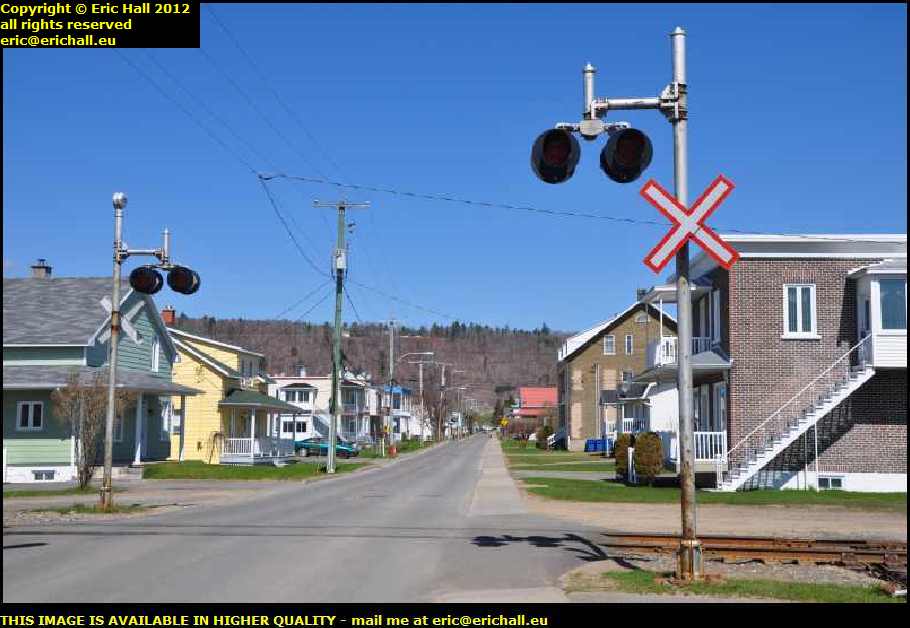
The main road goes off up there, along the top of that hill in the background but I'm down below in the small town of St Joachim. There's no need to worry though - I'll be up there in an hour or so. You won't be missing anything.
First thing that you wil of course notice is the level crossing. I've found this ephemeral railway once more. When the railway line was built, St Joachim was a stop along the route and I was keen to check out the site.
First things first, though.
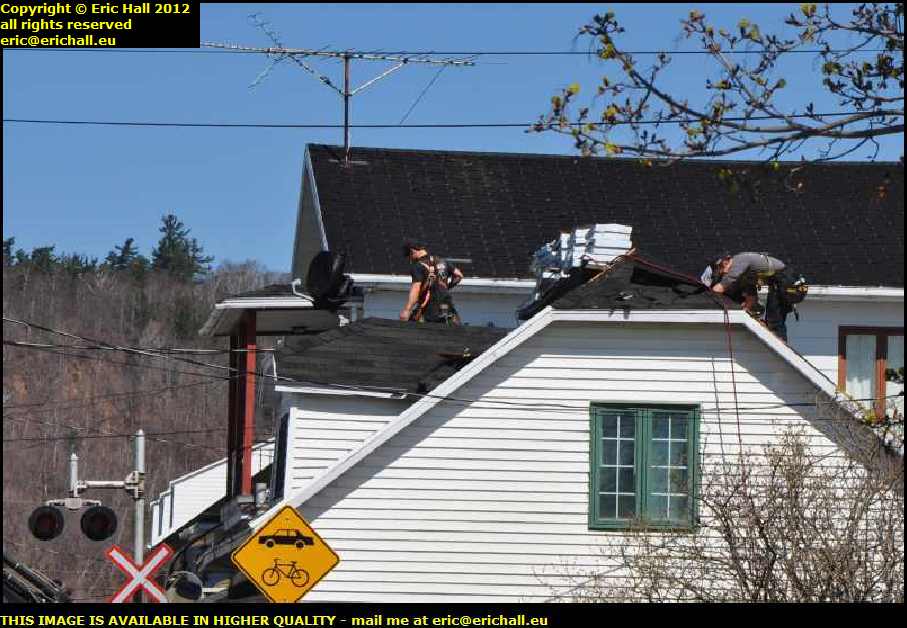
Keen readers of this rubbish will be aware that I own a plot of land in New Brunswick and in the fullness of time I'll be building a house upon it. The house will of course need a roof and so I couldn't resist the opportunity to go over and chat to a couple of roofers who were busily engaged in replacing a roof on a property in the town.
In the meantime, cyclists please be aware of the possibility of low-flying cars at this particular spot.
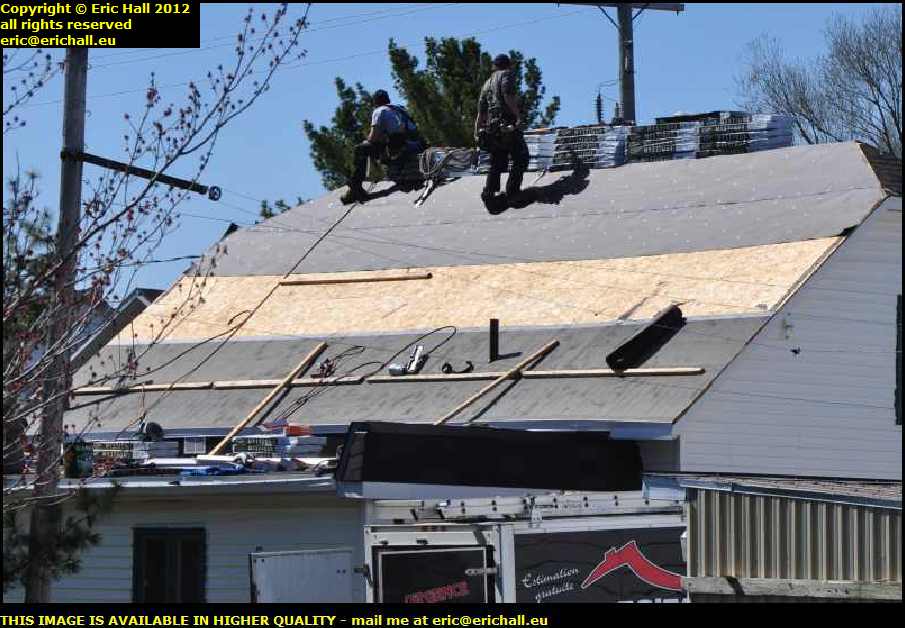
And so I was given a guided tour of a Canadian roofing chantier.
It is in fact almost exactly how I fitted the roof on my house except that I used wooden tongue-and-grooving instead of the metal sheet. If however, anyone else has any hints about roofing a house in Canada, please as I am always keen to learn.
One thing that I couldn't work out was why they fitted the membrane from the top. Surely it needs to be fitted from the bottom. Doing it how they are doing it, there's a risk of water or condensation running down from the top and infiltrating between the layers of membrane and so soaking the wood underneath.
Another thing that I don't understand is why they would use shingles in the first place. Shingles are known by another name in the UK - by a generic term of "roofing felt" and it's the kind of stuff that you put on garden sheds and the like. And looking at a couple of roofing shingles, there wasn't any difference.
I'm not very happy about putting it on a shed roof if I want to keep the contents dry on the long term and it's certainly not the sort of stuff that I would want to put on a house roof. However, I'm told that it's guaranteed for 30 years, and millions of Canadians fit it quite happily, so I suppose that it's ok.
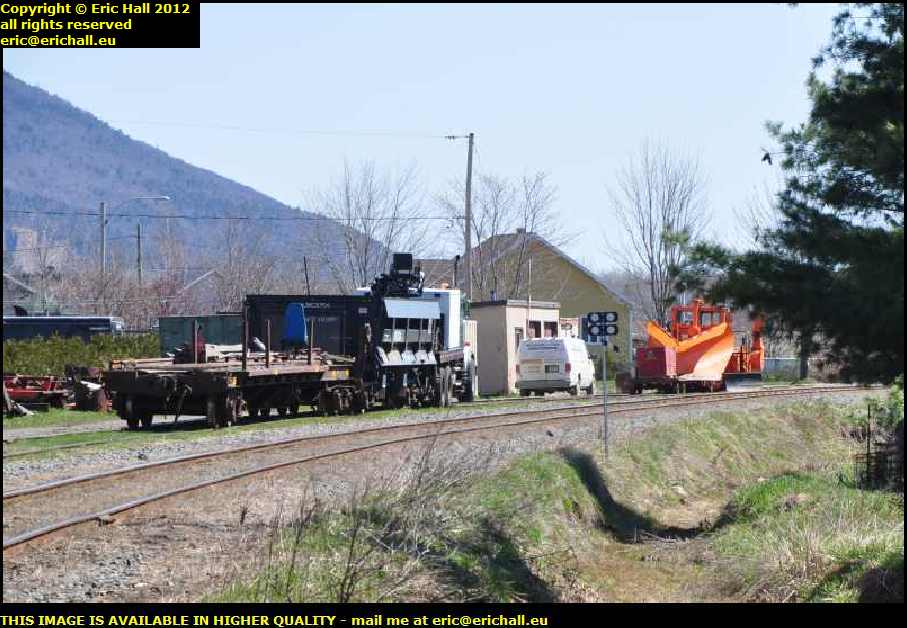
However, I wasn't here to see the roofing, although I did have to admit that it was interesting. As I said, I had come here to see the railway line and whatever else there might be that is railway-related.
Down the railway line a little way was a collection of vehicles and railway equipment, and noticing some sign of human activity, I set out along the track to see if there was anyone there who wouldn't mind being interrogated by Yours Truly. I've often said that if you want to know the answer, you mustn't be afraid to ask the question.
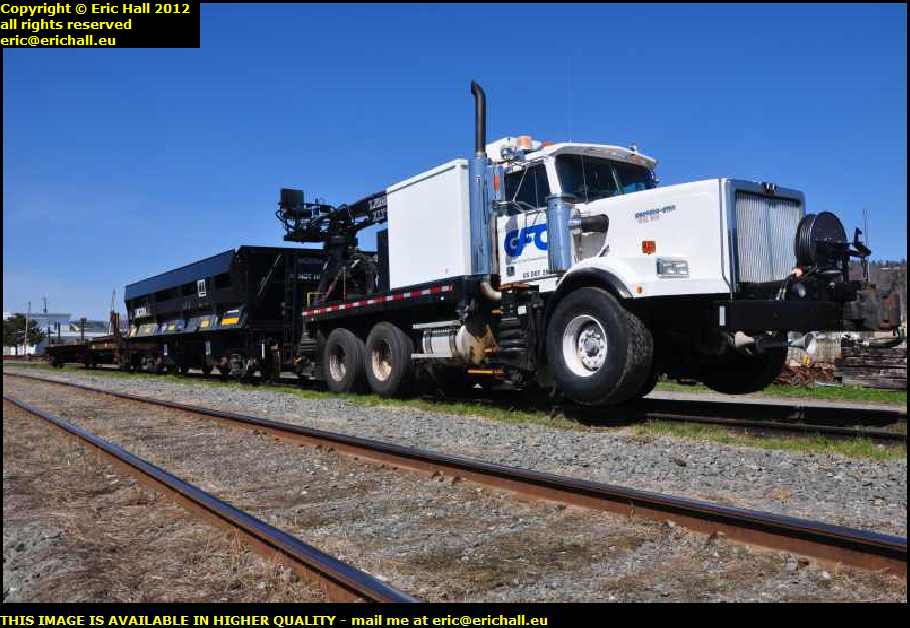
Now, if you are a keen follower of these pages you will have recalled that during my visit along the St Lawrence in 2010 I encountered a lorry that was travelling along the railway line pulling a train of several open wagons. At the time I said that I was unable to take a photograph of it, and I'm sure that you treated my observation with a certain amount of scepticism.
But here at St Joachim I actually managed to catch up with the beast and just to prove that I had not imagined it, I took this photograph so that you can see exactly what I meant.
For a European such as myself, this is a most astonishing thing to see.
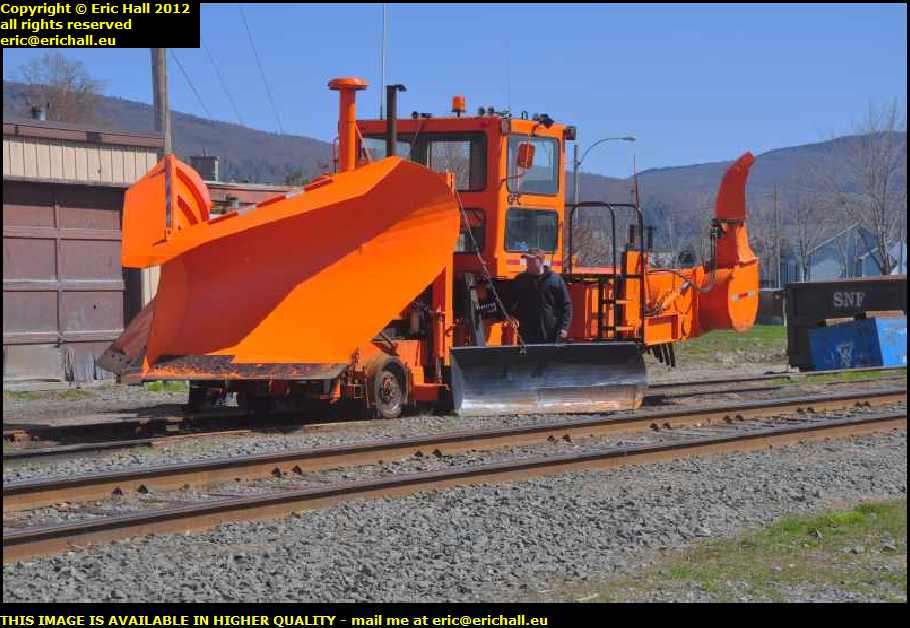
This is not quite so astonishing and I would have been surprised had I not seen a machine something like this. It is of course a self-propelled snowplough and you can tell by how solidly it is built exactly what kind of weather they expect to have around here in winter.
Of course it isn't a patch on the kind of snowplough that I saw in the Rockies in 2002 but then I suppose that even here they don't have the same kind of snow that they have at 10,000-odd feet up in the Rockies.
Another thing that I observed that even in the UK back in the days when there was a railway system there, they quite often had to couple together three or four steam locomotives to a snow plough in order to make any kind of headway against the drifts that they encountered in the Pennines or in the Highlands. I wouldn't like to speculate on the size of the engine in this here machine, but I bet that it's not a patch on the combined tractive effort of three or four British steam locomotives.
I was right about there being a friendly neighbourhood human in the vicinity, but he was not particularly knowledgeable about what was going on with the railway. He was however able to tell me that a tourism company had bought it and was running the service simply for the benefit of tourists.
There was no railway station here, no local train service and no freight either, something that I found rather strange. Having seen how difficult it is to move about on the roads around here in the winter months, some kind of rail connection between the Charlevoix and the city of Québec for the transport of merchandise and passengers would be a godsend.
Wea are in prime commuter belt country here. For several years St Joachim was actually the terminus of the line and there was a successful electrically-powered commuter service from here to Quebec for many years.
Ahhh well…
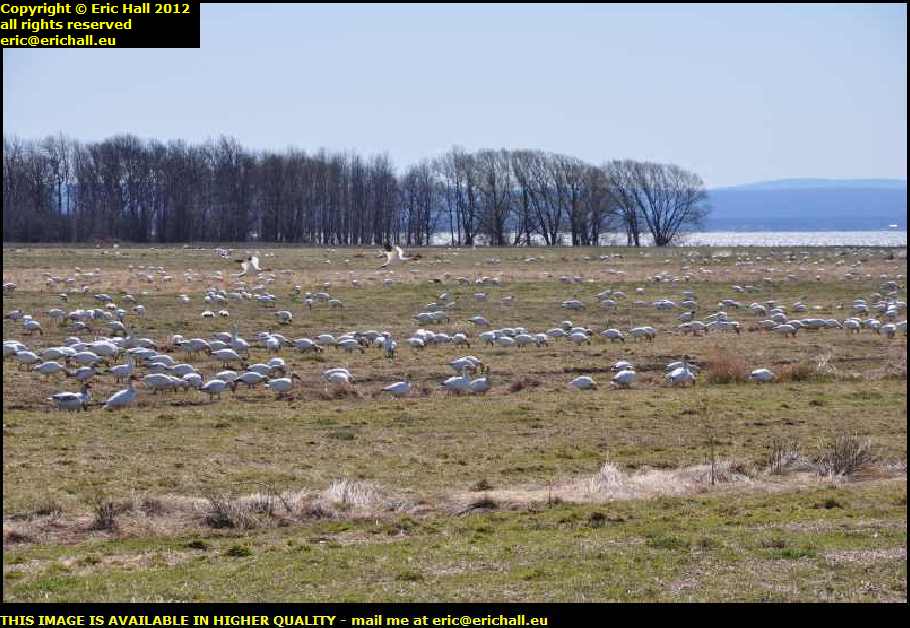
Leaving St Joachim, I travelled on down the road towards the towering peak of Cap Tourmente. Not that I managed to travel very far before I came to yet another shuddering stop at the sight of all of these birds.
According to another very vocal local yokel, it's my lucky day, for all these Oies Blanches, white geese (or maybe he means "snow geese") are all returning from their winter migration. They all seem to assemble just here, before going off to look for a spec of their own, and it's apparently something that happens over just a couple of days in the Spring. But there are thousands of them - absolutely thousands of them.
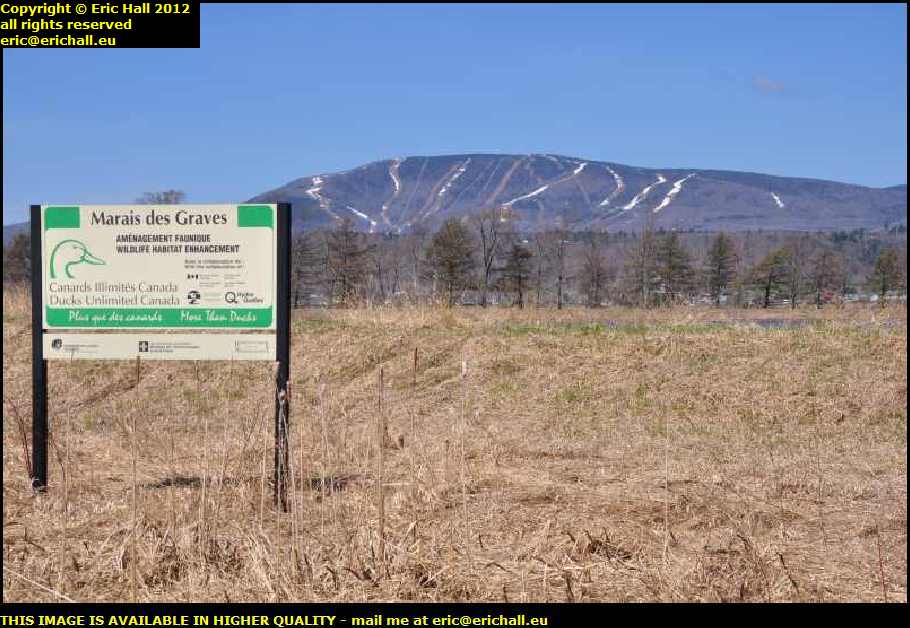
This particular marshland, the Marais des Graves, is some kind of reserve for the wildlife of the area, and quite rightly so. I'm all in favour of a little bit of birdwatching as you know, but not of the kinds of birds that you might expect to see around here.
In the background is of course the Mont Ste Anne, complete with snow in certain places. Further examination of the photo left me with the impression that those tracks down the mountain are actually the pistes for a Alpine ski resort. I shall have to dust off my skis, won't I? It's been a while.
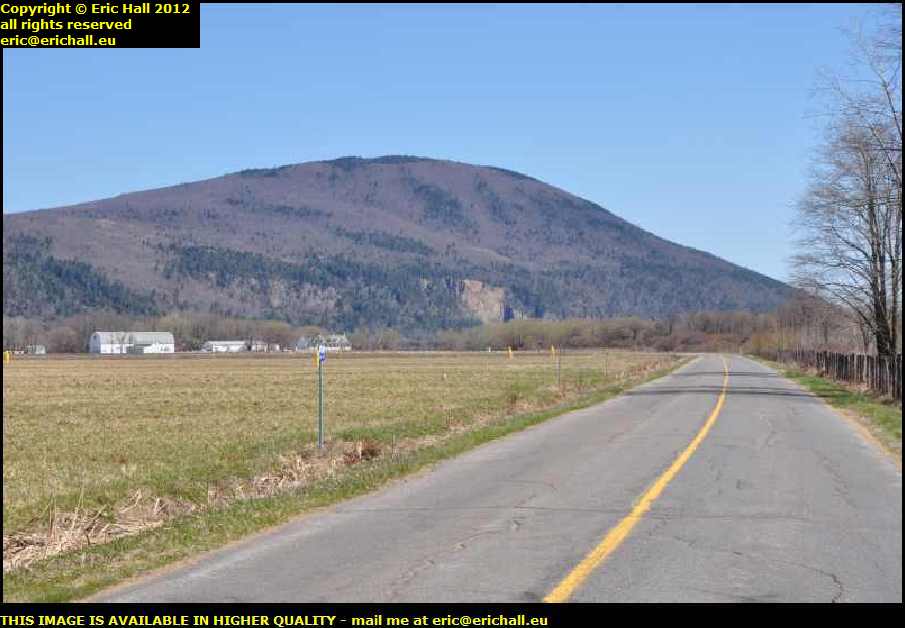
This is, however, what I've come to see. The famous Cap Tourmente. I've driven over the top of the mountain more times than I can remember, but I've never been able to see it from close up.
Not that this is particularly close up either, but it's the best view that there is. There is a road over there by those houses that leads along to the foot of the Cape but it's one of those roads where you are asked "to prepare your admission money" and in any case, it was closed for the season.
Had there been less wind (for it really was wicked out there and in a minute I'll probably start yet another rant about the absence of wind turbines around here), I would have been sorely tempted to follow the railway track along the foot of the Cape and see what the view would be like from down there.
But one thing that I am learning is that for serious tourism of the style that I am able to do, there's only a very small window of opportunity and somehow I never seem to be in it.
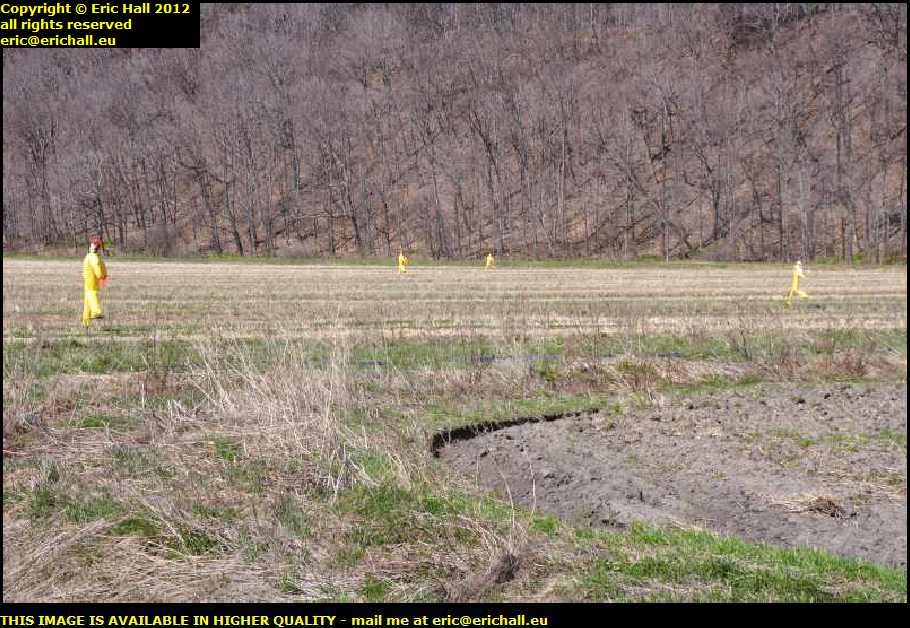
The field across the road from where I took the above photograph was certainly very interesting.
My attention was drawn particularly to the scarecrows, or scaregeese I suppose. Dressed in their yellow waterproof gear, they are so frightening that not only have the geese stopped pinching the produce of the local farmers, they have even brought back all of the produce that they stole last year.
There was nowhere else to go down here along this road so I followed the road around and back out. And it wasn't until I rejoined the main road that I asked myself the question of why I hadn't taken the trouble to go for a wander around the town of St Joachim.
It seemed a strange thing to do - to come all this way down here just to look at a roofing chantier and a railway line and not at least look at the church and the waterfront. Not only that, St Joachim is said to be the site of the first European farm in the St Lawrence valley. I suppose that it's just one more good reason to come back around here on another occasion.
After all, my overall verdict on the St Joachim detour was that it was well worth the visit, and it will probably be just as interesting, if not more so, on the next occasion.
©